Structural and Mechanical Engineering of Energy Systems
Large rotating equipment, structural support systems, and demanding environments. Two major energy programs in Adept’s project history — both mechanical and structural engineering, correctly characterized
Adept’s energy work is mechanical and structural engineering applied to energy system components — not energy development, permitting, or grid integration. The engineering problems in this sector are demanding: structural systems designed for continuous loading in corrosive or high-current environments, large drivetrain components where reliability is measured in decades, and qualification environments that leave no margin for approximation. The two programs below are the work. They speak for themselves. Adept’s energy work is mechanical and structural engineering applied to energy system components — not energy development, permitting, or grid integration. The engineering problems in this sector are demanding: structural systems designed for continuous loading in corrosive or high-current environments, large drivetrain components where reliability is measured in decades, and qualification environments that leave no margin for approximation. The two programs below are the work. They speak for themselves.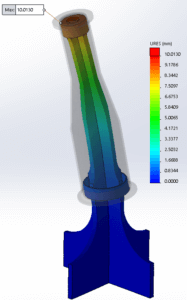
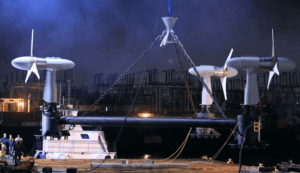
Structural and mechanical engineering of the underwater support pylon for Verdant Power’s tidal turbine system — the first commercially-licensed tidal power project in the United States, deployed in New York City’s East River. Continuous submerged operation in a bidirectional tidal current environment.
Verdant Power’s Roosevelt Island Tidal Energy project deployed horizontal-axis turbines on structural support pylons anchored to the floor of New York City’s East River — a tidal strait with strong bidirectional currents reversing approximately four times daily. The structural components must survive that load environment across the project’s full operating life without routine maintenance access.
Adept’s scope was the structural and mechanical engineering of the turbine support pylon — the load path between the turbine nacelle and the riverbed foundation. Material selection, structural geometry, connection design, and corrosion protection strategy were all defined by the operating environment. Failure in this application means a full system retrieval operation, not a field repair.
The project is the first commercially-licensed tidal power project in the United States. Verdant Power’s system subsequently received FERC’s first-ever hydrokinetic pilot project license and delivered over 300 MWh to the New York City grid.
 Preliminary mechanical design and structural analysis for 1.5 MW and 3 MW direct-drive wind turbine programs — large-scale rotating machinery where the structural and drivetrain engineering operates at a scale and load class that standard component solutions don’t address.
Direct-drive wind turbine development at the 1.5 MW and 3 MW scale eliminates the conventional gearbox and shifts the engineering challenge to the structural interface between the rotor, the generator, and the tower structure — high torque loads through a structural system exposed to continuous wind loading, dynamic fatigue cycles, and a 20-year design life.
Adept’s engagement covered preliminary mechanical design and structural analysis — the early-stage engineering work that defines the structural architecture, establishes the load cases, and identifies the critical design parameters before detailed design begins.
The US large wind turbine development market has since consolidated substantially. The engineering capability demonstrated here — large-scale rotating machinery structural design and analysis — applies to energy system development programs at any scale.