

Previously I’ve been discussing the engineering process and prototyping… important subjects… dry… but hey, it’s engineering. Not so dry for those of us that live it.
I’d like to thank everyone who has appreciated and contributed to follow-up, discussion and praise. However, I’m going to shift gears and share with you an anecdotal experience that I believe taught me a very important Engineering lesson.
As many of you know, I worked for a major aircraft manufacturer for many years and truly believe that my experiences there made me the engineer I am today. I have many fond memories of those experiences.

There was one particular project that granted me a baseline opportunity to learn. I was only 5 or 6 years out of the University, working with a group that was retrofitting a research aircraft for a new mission. The retrofit was an entire overhaul and more. I studied what was changing and the more I understood what was being saved the more I began to wonder why not design a new aircraft. Although in actuality the majority of the airframe structure was being recycled, which added an additional challenge, the box was already defined (dam!), so whatever we did we had to fit inside it. And, we all know the 10 pounds joke…
 The Aircraft was a helicopter that was specifically developed to test new main rotor configurations. And this is what we were preparing to do. Test a wild new rotor whose science was decades old, but now were there manufacture methods capable of bringing it to reality. The uniqueness of this rotor was that it would fly as a typical helicopter with a rotating main rotor, BUT would be able to STOP “during” fight and transition the aircraft to fixed wing flight. Really, for real, that’s incredible and we have to make it happen?! Have I mentioned that it is and was a great time to be an engineer!
As you might expect, as a young engineer I was wide eyed and very excited to be working on such a unique and revolutionary project. During this project, I was given several increasing responsibilities. It was probably the first time I was tasked with designing a total system from the ground up. That system was… a BRAKE? No ordinary brake. But a brake that would be capable of stopping a massive rotor (during flight, never a good idea for a helicopter). Exactly, that’s all, just stop it, re-position it and lock it, while the aircraft…did God know’s what… Great! sign me up! However, that’s not what I wanted to tell you about. The day I wanted to tell you about was much earlier, during the preliminary development of this aircraft.
I owe a great deal of gratitude to the many mentors at this company. But one particular mentor on this project, and I remember him well, we’ll call him George. George was quite a character, a middle-aged man with gray hair, a wardrobe that was usually wrinkled, stained and from a decade lost in time. One of his most distinguishing characteristics was that he always carried a pipe, yes the tobacco type. Remember we’re talking quite a long time ago, when smoking was permitted “everywhere” (oh my! how did we all survive?). So, George loved his pipe and was rarely seen without it. As a matter of fact, he had a peculiar callous in the middle of his left hand, a callous caused from clapping the spent tobacco from his pipe. George also had thick callouses on both elbows from long hours, staring/glaring/theorizing at engineering prints on drawing boards.
 Anyway, I was allowed to work alongside George for several years and one day he asked me to gather a bunch of binders from his desk and help him carry them to a meeting. We traveled through several long halls then I began to notice, we were heading towards the senior management offices of the engineering building. We then entered the conference room just outside the Vice President of Engineering’s office, awesome, this is a place I’ve never been. Assembling were many heads of departments and managers. My excitement was building but I understood I was only helping George carry his binders to the meeting. To my astonishment, he asked me to stay. Well, this was a meeting of the many great minds of the company; to present, discuss, argue and plan a new aircraft. (holy &%$#! Batman!) It went on for hours, each group describing their particular subsystem of the aircraft, it’s basic configuration and overall requirements. There were view-graphs after view-graphs (for you younger engineers, view-graphs were actual physical plastic slides placed on a light projector for all to view, just like PowerPoint, but with no computer, and much harder to prepare), I watched and listened intently as the Vice President orchestrated the meeting listening and learning about this new aircraft’s evolution towards reality.
I was in awe of the complexity and thoroughness of each system and groups presenting them. From structural to electrical, to hydraulic, to propulsion, to avionics, to aerodynamics, you get the picture… After hours of this, the meeting was coming to a close and everyone was feeling great about how everything was coming together, many side conversations had begun in all corners of the conference room, the technical banter with the total amount of engineering horsepower in this room was inspiring. Then it happened!
While everyone was beginning to sing kumbaya, you could see George quietly thinking to himself and then he raised his hand, sort of like a fourth grader in math class. While the majority of the room ignored George, the Vice President responded to George and quickly brought the roar of the room to silence….The VP said, “yes George, what is it?”. George cupped his pipe similar to Sherlock Holmes and preceded to address each group in the room, repeating each group’s system power requirements. You see each system of the aircraft requires power, this power can only come from one place, the jet engines. While George reiterated each system’s power requirements (from memory) he recited the tally…when he finished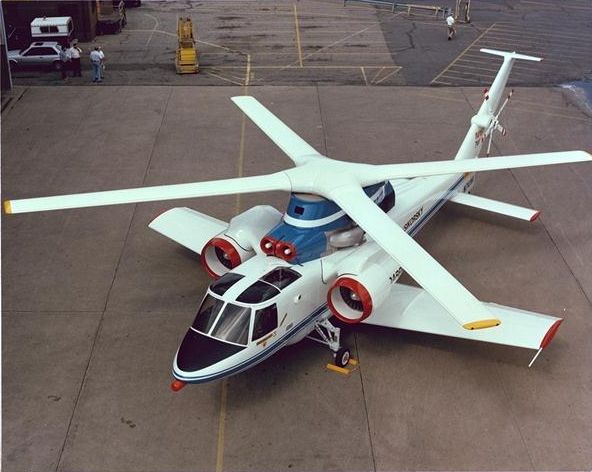 going around the entire room (ignoring the rolling eyes…) he said, “well gentlemen that adds up to 13,840 horsepower and our engines only put out 12,000 horsepower!”. The room erupted, now the kumbaya grins turning to frowns, many began checking George’s math as they shuffled through view-graphs and binders…, it was true, so it was back to the drawing boards with the mandate to reduce their power requirements by 7-10%.
So the lesson is obvious and everyone has heard it, don’t forget to see the forest through the trees. Here with all the complexities of a State of the Art aircraft and Engineering talent second to few, it was all turned on its head by ADDITION. No project is too complicated or too far along, to return to the basics and to the original specification. This was a great day for this project, if it weren’t for George, 1000’s of Engineering hours would have been spent before realizing the obvious. Thanks, George, for everything.